
European countries discuss deployment of up 30,000 troops to Ukraine - media
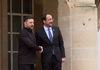
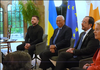
France, Britain and Turkey will push a proposal to deploy a peacekeeping force with possible logistical and intelligence assistance from the United States when they meet with Ukrainian President Volodymyr Zelenskyy in Paris on January 6, Radio Free Europe/Radio Liberty reported on Tuesday, citing its own sources.
“The talks will address outstanding issues, including rules of engagement, U.S. security guarantees and territorial disputes, including Donbas and the Zaporizhzhia nuclear power plant,” the report said.
European officials told Radio Free Europe/Radio Liberty that there was a "new sense of urgency" after a meeting of national security advisers over the weekend and a gathering of military planners on January 5. They hope the meeting in Paris will help synchronize the positions of the United States, Ukraine and other European countries.
French President Emmanuel Macron said he hoped to present "concrete commitments" on Ukraine’s security after the talks. "The idea is that in the event of a ceasefire, there should be clarity about the composition and deployment of peacekeeping forces... Some officials say that different figures are being heard in different European capitals regarding the size of the contingent. They range from 15,000 to 20,000, although some hope it will be closer to 30,000 peacekeepers who will ensure the security of the sea, the sky and the land," the publication writes.
Military plans were not made public during the meeting. "The bulk of the troops are to be provided by France and the United Kingdom, which will be responsible for the ground and air components. Turkey has made it clear that it will assume responsibility for the security of transport routes in the Black Sea. However, it is not yet clear how close the potential Coalition of the Willing forces will be to the contact line. Most European officials with whom RFE/RL spoke believe that they will be deployed in western Ukraine to support and train Ukrainian troops," the report says.
One European diplomat acknowledged that one of the questions that still needs to be answered is the response to a possible Russian attack. "We are essentially still discussing whether to open fire or flee," he said.
Among the unresolved issues mentioned are the rules of use of force and security guarantees from the United States. While both Brussels and Kyiv are increasingly optimistic that Washington will provide a "reliable safeguard," it is still unclear what form this will take. European officials told RFE/RL on condition of anonymity that U.S. troops could be present “on the ground” in a noncombat role, monitoring the ceasefire. The coalition also hopes that Washington will continue to provide logistical and intelligence support.
The issue of territorial control will also be discussed in Paris: Ukraine is pushing for either a freeze on the contact line or the entire Donbas region to be turned into a demilitarized zone. Another issue is the ownership of the Zaporizhia Nuclear Power Plant in the occupied city of Energodar: the Ukrainian side rejects the idea of joint management of the plant by Ukraine and the Russian Federation, preferring instead the option in which the United States would intervene and sell the electricity produced at the Zaporizhzhia Nuclear Power Plant to Moscow, but Brussels doubts that the Russian Federation would agree to any of these points. At the same time, the European Union is preparing a new package of sanctions against the Russian Federation - the twentieth since the start of the full-scale invasion. It is expected to be submitted to the member states for approval at the end of January.