

State should become arbitrator between Ukrzaliznytsia, business – Metinvest
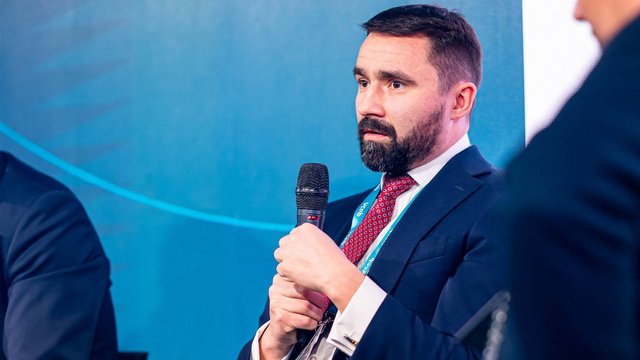
The state should become the arbitrator between Ukrzaliznytsia and business, otherwise, in the conditions of increasing the freight transportation tariff, this may lead to the suspension of the work of even more enterprises, said Oleksandr Vodoviz, head of the office of the CEO of Metinvest Group, at the conference Doing Agribusiness in Ukraine in Kyiv.
According to him, the company is currently focused on survival rather than development: it has been operating at a loss for two years and has suspended operations at the Inhulets Mining and Processing Plant, which employs 7,000 workers.
"We can compete in certain markets, such as Egypt: we deliver our products there, earn a margin of $5–7, and maintain our presence. But tariff increases make deliveries impossible, forcing us to shut down a blast furnace. When a furnace stops, another mining and processing plant stops as well," Vodoviz said during the panel discussion Speaking Frankly About Logistics.
He believes the state should act as an arbitrator between Ukrzaliznytsia and businesses—farmers and steelmakers alike: "The state should say that it is more beneficial not to raise tariffs but to subsidize Ukrzaliznytsia, because this will generate more tax revenues and export proceeds, and the country as a whole will benefit. But there is no such arbitrator right now: the state sides with Ukrzaliznytsia."
At the same time, Vodoviz noted the greatest openness of the state monopoly in the past 10 years and its willingness to engage in dialogue with business.
"All freight transportation is profitable. The problem is the enormous pressure from passenger transportation on freight tariffs. Over the past year, this amounted to a minus of UAH 24 billion," he added.
In European Union countries, this problem is addressed by financing national logistics operators from the state budget.
Another problem facing the state operator is the existence of about 525 low-activity freight stations that handle roughly one railcar per week.
The head of the CEO Office at Metinvest pointed out that differences in tariffs for various cargo categories are driven by unequal burdens on infrastructure: the more stations involved and the smaller the shipments, the more expensive transportation should be.
Vodoviz believes that Ukrzaliznytsia’s new tariff-setting model should be based on the principle of fairness: if cargo passes through many stations, requires additional shunting operations, or is transported in small batches, such a route should cost more—regardless of whether it involves ore, coal, or grain.
The head of the CEO Office emphasized that fair tariffs can be achieved only through reform of the national carrier: "Ukrzaliznytsia needs reform that involves a transparent tariff-setting mechanism reflecting the real costs of transportation."