

The "Hard Power" Raw Materials Era
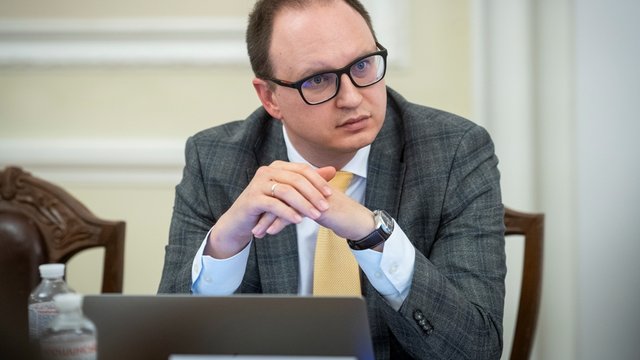
Yehor Perelyhin, Deputy Minister of Economy, Environment and Agriculture
This Monday marks the start of London Mining Week and the Resourcing Tomorrow conference. We also expect a number of highly important and very promising high-level bilateral meetings. On my way to London, I worked through a set of core ideas and talking points — what we should raise and what we should agree on with our Western partners. As always, I chose to look at everything through the lens of supply chains, value chains, and today’s complex geopolitical landscape. I came to a clear conclusion: we must highlight the issue of modern technological confrontations, and we must build a cooperation framework around “resource and industrial corridors” — from the extraction and processing of critical minerals (critical raw materials) to the production of components, final technologies, and end-products.
We are used to discussing critical minerals in the context of energy transition, electrification, and green energy. Of course, the most commonly recognised critical minerals include lithium, nickel, cobalt, graphite, copper, and rare earth elements. But if we look more broadly, the picture becomes far more complex, larger in scale, more detailed — and more dangerous. The very system intended to supply raw materials for the energy transition is simultaneously the foundation of our defence and aerospace industries — and today, that system is structurally dependent on a small number of geographic players, primarily China. The geographic concentration of critical raw material supply chains has become a central challenge for the strategic industries of the Western world.
The International Energy Agency states clearly: for 19 out of the 20 most important energy-related critical minerals, processing is predominantly controlled by a single country. Extraction is gradually diversifying — but midstream is not. In some segments, concentration is even increasing.
From Energy Metals to “Hard-Power Raw Materials”
The production of electric vehicles, green energy technologies, and energy-storage systems is driving explosive growth in demand for copper, lithium, nickel, cobalt, graphite, and rare earth elements. At the same time, mining is gradually shifting to new jurisdictions. Yet deep processing, chemical conversion, and component manufacturing (precursors, cathodes, anodes) remain concentrated in China and a few other geographic hubs.
This alone is reason for concern. But around these well-known and popular critical minerals lies a more obscure, quieter “belt” of materials that determine whether modern armies, aerospace systems, and nuclear energy can function at all. We are talking about metals such as titanium, beryllium, zirconium, hafnium, tantalum, scandium, molybdenum, tellurium, tungsten, uranium, vanadium, germanium, and gallium.
In terms of market size, these are not giants. Most of them are by-products of copper, nickel, zirconium, or titanium value chains. But they form the control loop of modern hard power:
- Titanium — aircraft, engines, naval structures, missiles.
- Beryllium — optics, guidance systems, satellites.
- Zirconium and hafnium — nuclear fuel rods and reactor control assemblies.
- Tantalum, molybdenum and tungsten — electronics, high-temperature components, armour-piercing munitions.
- Scandium — advanced aluminium alloys and fuel cells.
- Tellurium — solar modules and thermoelectrics.
- Vanadium — high-strength alloys and long-duration vanadium-redox batteries.
- Uranium — fuel; enrichment as a geopolitical lever.
- Germanium — electronics and critical semiconductor components for defence systems.
- Gallium — microchips, LEDs, solar cells, laser technologies.
Let’s call it what it is: micro-markets with macro-levers. The loss of access to just a few hundred tonnes of hafnium, tungsten or high-purity tellurium could disrupt billion-dollar aerospace and defence programmes.
Fragility and Structural Vulnerabilities
There are three key structural features that make this entire landscape particularly exposed.
First — the by-product nature of extraction. Most of these metals are not mined through dedicated, standalone operations. Hafnium is a by-product of zirconium. Tellurium comes from copper smelter slimes. Scandium is most often tied to nickel, cobalt, or titanium projects. Vanadium and molybdenum are linked to steel and copper. This means that price signals work much more slowly and have far less influence on increasing supply than we are used to in classic commodity economics — for example, in markets for more conventional metals like copper. For a clearer illustration — you can double the price of tellurium or hafnium and still see almost no new production if the underlying volumes of copper or zirconium do not change.
Second — geography and governance. For several of these metals, production is concentrated in:
- China (REEs, magnets, tungsten, molybdenum, tellurium, scandium, a large share of titanium and zirconium processing)
- Russia and its sphere of influence (uranium enrichment, vanadium, part of titanium and scandium)
- Conflict-affected regions of Africa (tantalum, part of tungsten)
- A very limited number of projects in Australia, North America, and select other states
And even where extraction is possible, separation and deep processing are still concentrated in one or two geographies.
Third — supply chains are already used as economic weapons.
On paper, deposits are plentiful. In practice, China controls the chemistry, deep processing, and component manufacturing.
What this means for the Western aerospace and defence sectors
For Western aerospace and defence, the conclusions are straightforward. Their technological edge will remain: knowledge, IP, and industrial capacity are intact. Licensing and certification systems can serve as highly effective tools to shield Western markets — we see this clearly in titanium sponge and alloy certification for aviation. But Western industrial players, and Western states more broadly, will have to operate in a world of higher costs and permanent risk management.
What we should expect:
- More risk. Export controls, new licensing regimes, and market or industrial dead-ends in specialised metals, magnets, or certain alloys will slow deliveries of munitions, defence equipment, sensors, and aircraft.
- Higher and more volatile costs. The system will have to absorb a permanent security premium.
- A shift from just-in-time to just-in-case. Strategic stockpiles of titanium sponge, REE metals and magnets, tungsten powders, and key electronic materials and components will become necessary.
- Pressure on engineers. Design will need to minimise use of scarce elements, increase the range of material options, and qualify and certify alternative alloys where possible — though for many applications (REE magnets, beryllium optics, high-performance titanium alloys) there simply is no true substitute without loss of capability.
- Reindustrialisation. New industrial clusters — in rare earths, titanium, tungsten, molybdenum, vanadium, uranium and other critical value chains — will have to be built and expanded in the US, EU, UK, Canada, Australia, Japan, and Korea. Even if it is more expensive than buying Chinese materials. Ukraine is no exception.
In other words, we are quietly shifting from “lean” globalisation to a more military-economic planning logic for securing critical raw-material supply.
Strategic planning and reindustrialisation — the only systemic solution
An uncomfortable but honest conclusion: the market alone will not neutralise these vulnerabilities. In a world of micro-markets driven by by-product extraction, long development cycles and high geopolitical tension, price is a weak and inefficient signal.
If we want to reduce concentration and restore strategic autonomy, several clear steps are needed:
First. Treat critical raw materials as infrastructure.
Finance titanium, rare earth, tungsten, vanadium, uranium and by-product value chains the way we finance ports or power plants — through blended capital, state guarantees and long-term offtakes, rather than as speculative projects.
Second. Engineer “corridors” for each metal.
Build value chains and build partnerships. Develop resource corridors that link friendly countries into an integrated chain — where ore is extracted, where it is processed, where industrial demand resides. Ukraine, for example, can offer a corridor built around titanium–zirconium–hafnium, with scandium and germanium for European and Japanese metallurgy; REEs sourced from Australia, Africa and the Americas for non-Chinese deep processing and onward supply to Western permanent-magnet manufacturing; as well as combined Ukrainian by-product projects focused on beryllium, REEs and other elements integrated from the outset into the value chains of leading Western defence-technology producers.
Third. Integrate by-product critical elements into strategies for mining and processing base metals and critical minerals.
When planning new copper, nickel, titanium or zirconium projects, ask from the start: which tellurium, hafnium, scandium, vanadium or molybdenum can be economically recovered — and incentivise the operators who succeed.
Fourth. Establish strategic reserves and stimulate tailings recovery and recycling.
Holding one to three years of expected demand in strategic reserves is economically justified when compared to the cost of delays in defence or energy programmes.
Fifth. Make critical raw materials supply chains a pillar of new security policy.
NATO, the G7 and Western allied coalitions must coordinate not only budgets and serial weapons production, but also answer a fundamental question: where do we source critical and strategic materials — titanium, tungsten, beryllium, rare earths, vanadium, uranium?
The time to act is now.